
Protecting Waterfront Operations Requires More Than Property Insurance
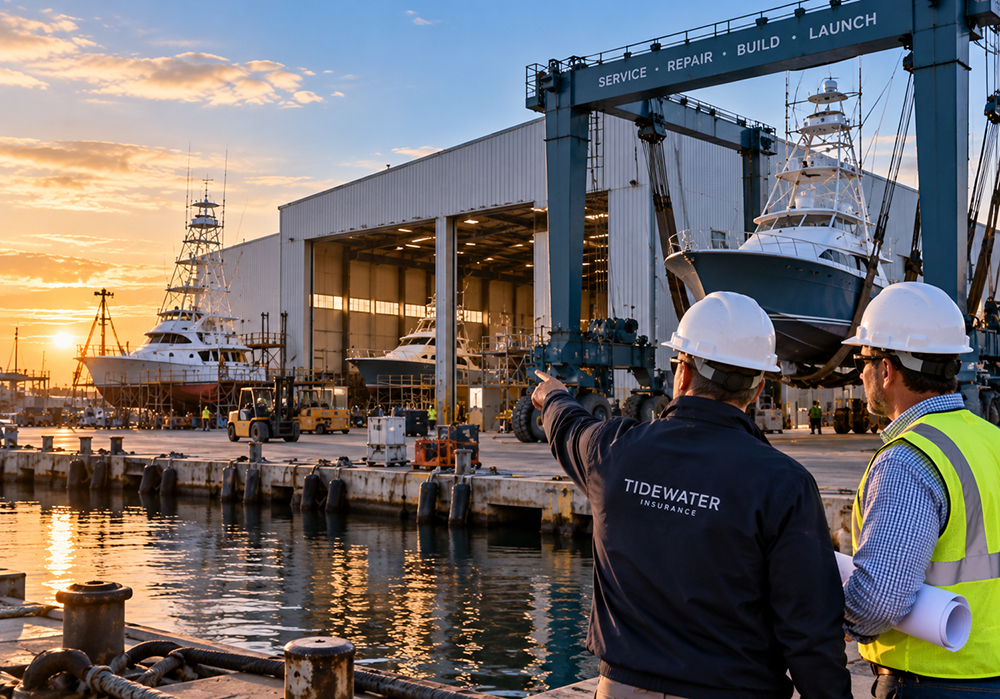
Commercial marine facilities operate where land-based property, waterfront operations, vessels, equipment, employees, contractors and customers regularly intersect. For shipyards, terminals, docks, repair facilities and other waterfront businesses, an effective insurance program should consider the entire operation rather than treating each exposure independently.
A serious loss at a marine facility can involve much more than damage to a building. Vessels may be stored, repaired or serviced on the property. Specialized machinery and mobile equipment may operate throughout the facility. Customers, contractors and employees may work alongside one another while cargo, materials and vessels move through the operation.
These overlapping exposures make commercial marine facilities different from many traditional commercial properties. Building an appropriate insurance program begins with understanding the facility, the work performed there, the property involved and the liabilities created by the operation.
Understanding Commercial Marine Facility Risk
Every waterfront operation presents a different combination of property and liability exposure. A repair yard working directly on customer vessels has different risks from a terminal handling cargo, while a marina, dock or other marine facility may have its own combination of buildings, equipment, customers and vessel activity.
The insurance program should therefore reflect what actually happens at the facility, the property being protected and the responsibilities the business assumes for vessels, equipment and third parties.
Property, Equipment & Waterfront Assets
Marine facilities can include buildings, docks, piers, machinery, tools, storage areas, specialized equipment and other property essential to daily operations. The value, location and use of those assets are important considerations when evaluating property protection.
Equipment may also move throughout the facility or be used directly in marine operations, creating exposures that should be evaluated alongside traditional commercial property coverage.
Liability Exposure at Marine Facilities
Waterfront businesses can face liability exposures involving customers, contractors, employees, vessels and other third parties. The work performed at the facility and the degree of responsibility assumed for property or vessels belonging to others can materially affect the risk.
Repair work, vessel movement, loading and unloading, equipment operation and access to docks or waterfront areas can each create different liability considerations.
Commercial Marine Facilities May Include
Shipyards • Vessel Repair Facilities • Marine Terminals • Docks • Waterfront Operations • Boat Yards • Marine Service Facilities • Equipment Operations • Cargo Handling Areas and other commercial waterfront businesses.
Pollution Exposure Deserves Specific Attention
Marine facilities may handle fuel, oil, chemicals, machinery, vessels and other materials capable of creating environmental exposures. A spill or release can create cleanup costs, third-party claims and other liabilities that may require specialized insurance consideration.
The nature of the facility, materials handled, services performed and proximity to the water can all influence the pollution exposure. Facility operators should understand how their insurance program addresses these risks and where specialized pollution liability coverage may be appropriate.
What Marine Facility Operators Should Consider
MARINE FACILITY COVERAGE REVIEW:
An insurance program should reflect the facility as it operates
today. New services, additional equipment, larger vessels, expanded
property, new contracts, increased revenue or changes in waterfront
operations can materially change the risk and should be considered
when reviewing coverage.
Contracts Can Change the Facility's Risk
Marine facilities often operate under agreements with vessel owners, contractors, customers, suppliers and other businesses. Those contracts can contain insurance requirements, indemnification provisions, additional insured requirements and other obligations affecting the facility's responsibilities.
Insurance requirements should be reviewed alongside the facility's existing coverage so operators can identify potential differences between contractual obligations and the protection provided by the insurance program.
Excess & Bumbershoot Liability Protection
Marine losses can involve significant severity, particularly when an incident affects vessels, waterfront property, employees, customers or the environment. Some facilities may therefore need liability limits beyond those provided by underlying policies.
Excess or Bumbershoot liability coverage can provide additional limits over certain underlying marine and non-marine liability policies, subject to the terms and conditions of the coverage.
Building a More Complete Marine Facility Insurance Program
A commercial marine facility may require several different coverages working together. Depending on the operation, this can include property, marine liability, equipment coverage, pollution liability, excess or Bumbershoot protection and other specialized marine insurance.
The goal is not simply to purchase multiple policies. The more important question is whether those policies reflect the facility's actual property, services, vessel activity, contractual responsibilities and potential severity of loss.
Tidewater Insurance Agency works with commercial marine clients to evaluate these exposures and develop insurance programs around their actual operations. Learn more about our Marine Insurance solutions for marine facilities, commercial vessels and specialized maritime risks.
Commercial Marine Facilities Insurance FAQ
What types of businesses may need marine facilities insurance?
Shipyards, repair facilities, terminals, docks, boat yards and other commercial waterfront operations may have specialized property and liability exposures that should be evaluated as part of a marine insurance program.
Why isn't ordinary commercial property insurance always enough?
Marine facilities can combine waterfront property, vessels, specialized equipment, work performed for customers and marine liability exposures. The appropriate insurance program depends on the actual operation and the specific policies involved.
Should pollution liability be considered for a marine facility?
Facilities handling fuel, oil, chemicals, vessels, machinery or other materials may have pollution exposures. Whether specialized pollution coverage is appropriate depends on the operation and how existing policies address those risks.
What should be reviewed when a marine facility changes or expands?
Property values, equipment, services performed, vessel activity, contracts, employees, customers, pollution exposures and liability requirements are among the areas that should be reviewed when the operation changes.
Review Your Marine Facility Insurance Program
Talk with Tidewater Insurance about property, liability, pollution, equipment and other coverage considerations for your commercial marine facility or waterfront operation.